Forgot to add being thrifty and eco-friendly to your New Year’s resolution list? Now is your chance to rectify that because January 10 is Cut your Energy Cost Day.
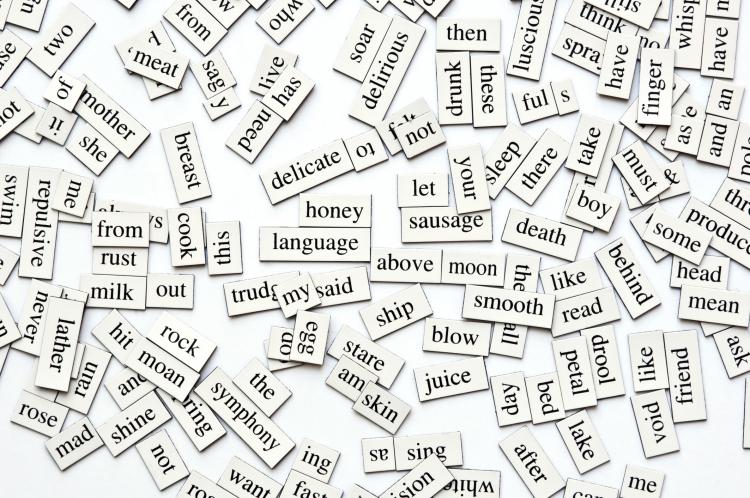
Love your dictionary? Do you like long, complicated, fancy words? If your answer is yes, then this is the unofficial holiday for you.
Learn New Words
While the origins of this holiday are unknown, we assume that those who created it wanted word and language nerds to celebrate their expansive vocabulary, and for people to pick up their dictionaries and thesauruses to learn more about the origin, meaning, and usages of words in their language.
Smallest Meaningful Unit
A word is the smallest unit in a language that conveys a meaning when it is written and spoken by itself. When written, it has white space at its beginning and the end, but not in the middle. When spoken, a word is a form of speech that is uttered as a single unit.
How to Celebrate?
Are you a word nerd? Be proud of who you are. Use words no less than 7 letters long in all your conversations.
Do crosswords and play word puzzles all day long.
Spend the day learning about new words and finding occasions to use them.
Did You Know…
…that according to the Oxford Dictionary, “bookkeeper” is the only word in the English language without any hyphens with three consecutive repeated letters?
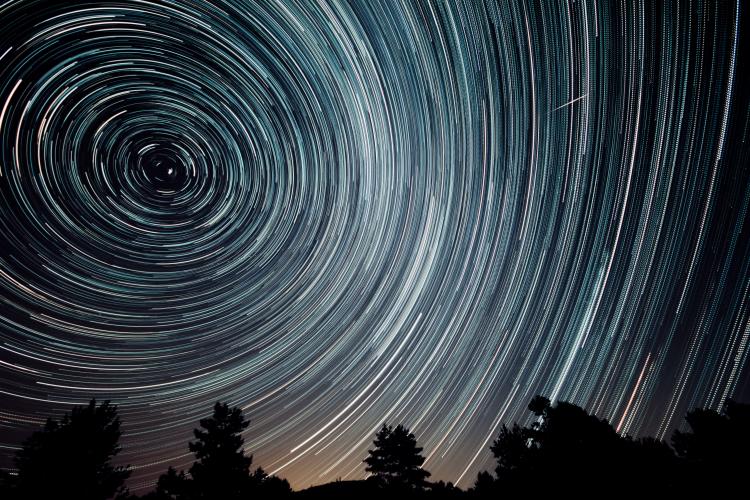
To prove his theory, Foucault suspended a lead-filled brass sphere, now called the Foucault Pendulum from the top of the Pantheon in Paris.
He showed that the plane of the swing of the pendulum rotated relative to the Earth’s rotation. You can now see the Foucault Pendulum demonstrating the rotation of the Earth in science museums around the world.
How to Celebrate?
Visit your local space and science museum to learn more about the Earth’s rotation and what effect it has on humans.
If you have kids, what about making a model of the Earth and the Sun with them, so that they can learn more about the Earth’s rotation?
A rock is a solid mass made of minerals or mineral-like substances. Used for a variety of purposes throughout the history of humankind – as tools, musical instruments, weapons and for mining – rocks form the outermost layer of Earth.
A Peek Into Earth’s History
While natural processes – volcanic eruptions and erosion – continually help create rocks on Earth, old rocks are especially important to those who study the Earth and its history. Old rocks hold many answers to the mysteries of Earth’s formation – they can tell scientists about natural events that played a role in the formation of the rocks and the effects that event had on other life forms in the area.
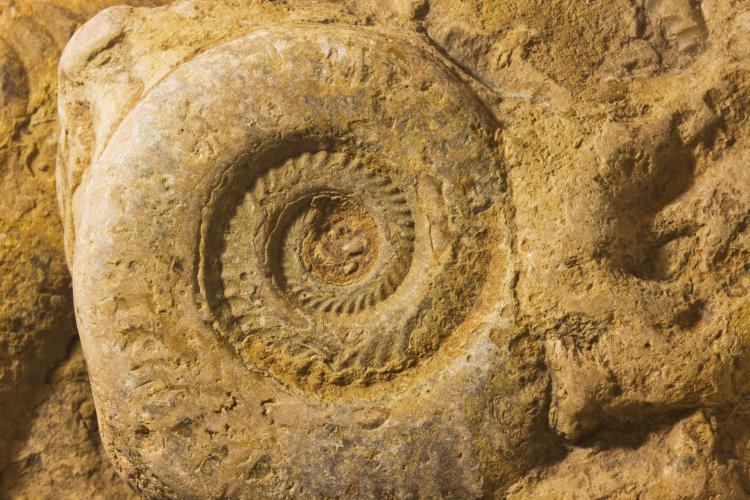
Old rocks can also sometimes hold fossils – the preserved remains of animals, plants and other organisms. These fossils can help scientists find out the kind of flora and fauna that existed in the past and what may have caused them to evolve or go extinct.
Finding the Age of Old Rocks
Geologists date old rocks using a technique called radiometric dating or radioactive dating. The process involves looking at the decay of radioactive elements available in rocks. The oldest rock of terrestrial origin to be dated using this method is a zircon found in the Jack Hills of Australia. Scientists estimate that the rock could be as old as 4.4 billion years.
How to Celebrate?
Learn more about the types of old rocks.
Pick up a book about fossils and learn how fossils tell us more about the Earth’s past or visit your local natural history museum.
Take a walk in the park and collect interestingly shaped rocks.
Buy your loved ones some pretty looking rocks. And by rocks, we mean jewels. After all, diamonds are old rocks.
January 6 is Bean Day. If your question after hearing this is, why? Well, because beans are healthy – they are rich in proteins and fiber and they taste good.
Some believe that this unofficial holiday, which is also known as Nation Bean Day in the United States, was created to commemorate the death anniversary of scientist Gregor Mendel. Known as the Father of Genetics, Mendel experimented on peas to discover the laws of genetic inheritance.
Many Varieties
Although many people around the world consider peas as part of the beans family, they are not technically beans. Botanists classify peas and snap peas as vegetables.
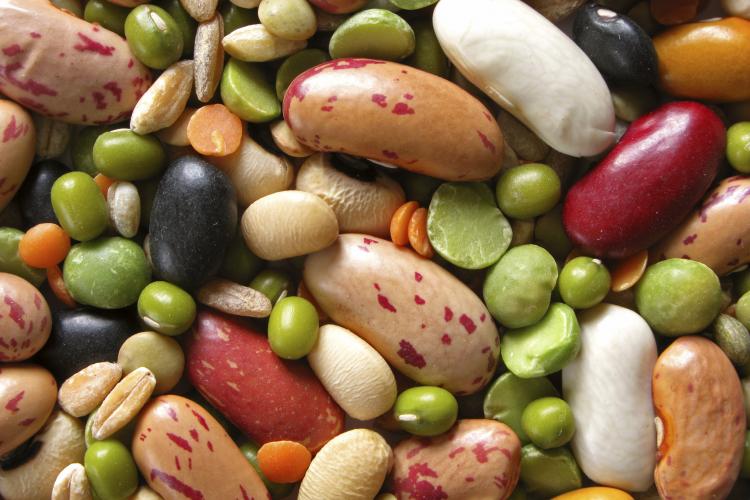
Beans have been consumed by humans since ancient times. They are a natural source of proteins, fibers and vitamins and have a small environmental footprint. Today, there are 40,000 known varieties of beans around the world. Only a few of these are cultivated for human consumption.
How to Celebrate?
This is easy, have beans for every meal: baked beans for breakfast, red beans and rice for lunch, and bean soup for dinner.
For dessert, have jelly beans, even though technically they are not beans.
Make bean art. Use different colored beans to make pictures.
Did You Know…
…that the leaves of a bean plant tilt towards the Sun in the day and fold up during the night?
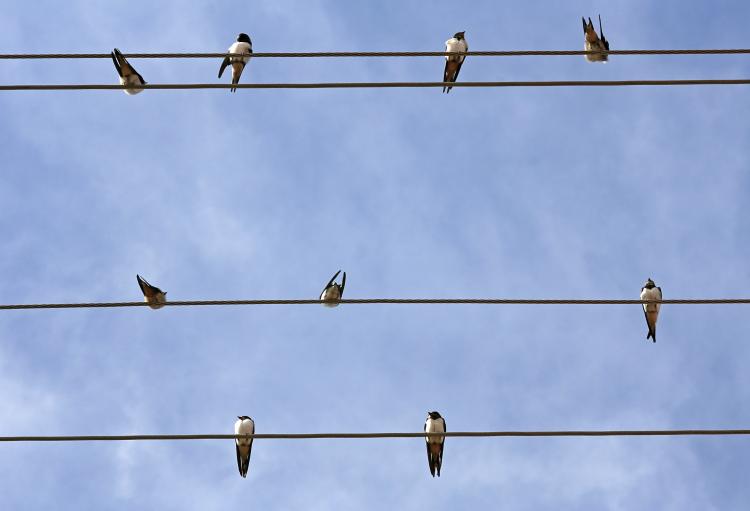
The day, started by Born Free U.S.A. and the Avian Welfare Coalition, aims to focus public attention on the fact that almost 12 per cent of bird species around the world are under threat of extinction.
How to Celebrate?
Read more about bird pet adoptions and laws in your country about adopting exotic birds as pets.
Do due diligence when getting an exotic or imported bird as a pet. Use only well-reputed pet stores.
Spread the word about humanely caring for exotic pet birds.
Change your social media display picture to a picture of your favorite bird.
Go bird watching and learn more about the birds indigenous to your area.
Did You Know…
…that hummingbirds lay the smallest eggs – the size of a pea – among birds?
The day celebrates information of little value and the individuals who not only remember these bits and pieces of useless information but also enjoy sharing them with others.
Latin Term
The word trivia comes from the Latin term for the intersection of three paths. In the Middle Ages, the word came to refer to the subjects – rhetoric, grammar, and logic – studied by those who followed the Liberal Arts field.
Of Little Importance
The modern day usage of the word trivia to mean something of little importance can be traced back to the publishing of the book – Trivialities, Bits of Information of Little Consequence – by British author Logan Pearsall Smith in 1902.
Knowing and sharing trivia as a hobby and a pastime, however, did not become popular until the 1960s when the weekly newspaper of Columbia University, the Columbia Daily Spectator, published a trivia game on February 5, 1965. Soon, trivia became a popular game played at parties and at a competitive level.
Trivia Day is also sometimes known as National Trivia Day in the United States.
How to Celebrate?
Gather up some friends and play Trivial Pursuit.
Call friends and family and enlighten them with some trivia.
Even better, stop random people and start a conversation with “did you know…?” You may even make some friends.
Participate in a trivia night or spend the day filling your brains with more random trivia.
Did You Know…
…that the term factoid, which is now used as a synonym of trivia originally referred to a piece of unreliable information that is accepted as a fact because it is repeated very often?
While the origins of this unofficial holiday are unknown, we assume that the holiday encourages people to catch up on their sleep post-holiday and New Year celebrations.
Important Sleep
Sleep is one of the most common and important human activity. Sleep allows human bodies to rest, heal, develop and can help memory processing and preservation. Lack of sleep or poor sleep can have multiple negative effects on the human body and mind.
How to Celebrate?
This one is straightforward. Get into your favorite PJs, crawl into bed and get out only when you want to.
They say that clean bed linen and an uncluttered and temperature controlled environment facilitates good sleep. Take stock of your sleeping environment on this day, and fix anything you think may be affecting your sleep.
Science fiction fans around the world celebrate January 2 as Science Fiction Day. It celebrates science fiction writer Isaac Asimov’s official birthday.
The day was widely celebrated for the first time in 2012 and is usually known as National Science Fiction Day in the United States.
Set in the Future
The holiday focuses on a genre of literature that explores the effect of imaginary change through technological innovations, scientific discoveries, natural events and disasters and evolution on people and their relationships. Usually, works of science fiction (sci-fi) are set in the near or distant future, and unlike fantasy, sci-fi tends to stay away from the supernatural and the magical.
Part of Popular Culture
Many scholars of the genre believe that the first piece of recorded fiction – the Epic of Gilgamesh – was also the first work of science fiction. Others believe that sci-fi became a legitimate genre of fiction during the late 16th and 17th century with the emergence of modern science. Today, science fiction is a well-read genre of literature and a huge part of popular culture also in movies and TV-series.
Father of Modern-Day Science Fiction
Isaac Asimov is considered to be one of the fathers of modern-day science fiction. A prolific writer, he is thought to have edited and written about 500 books and hundreds of short stories. Considered to be one of the most influential science fiction writers of all times, Asimov is credited with coining the word robotics and for introducing the Three Laws of Robotics. While he grew up in the United States, Asimov was born in Russia sometime between October and January 1920. He officially celebrated his birthday on January 2.
How to Celebrate?
Read your favorite science fiction authors, watch science fiction movies and hold science fiction themed parties.
Attend a short story and book reading that bookstores and libraries hold to showcase the works of classic and new science fiction authors.
Encourage young readers in your life to pick up a science fiction book or short story to read.
Did You Know…
…that Asimov had a fear of flying? According to some sources, he flew on an airplane only twice in his life. In addition to being aviophobic, he was a claustrophiliac – he loved to be in enclosed places.
Also known as Polar Plunge, Polar Bear Swim Day, New Year’s Dive, Loony Dook
Start off the year with an act of daredevilry. Celebrate Polar Plunge Day on January 1 by taking a dip in the cold, freezing waters of your local lake, river or pond.
The Polar Bear Plunge, where participants jump into a cold water body, is an activity usually held in the Northern Hemisphere. It is a popular New Year’s Day tradition in the United States, Canada, United Kingdom and Netherlands. In these countries, many people organize and participate in a Polar Bear Plunge for charity.






 Deborah & Munchkin's Adventures